|
and purify both nucleic acids (DNA and RNA) and proteins. Founded in San Francisco in 1967 by Peter and Jacqueline Hoefer, the company rapidly became recognized as a technology innovator and its quality products can be found in global laboratories on the cutting edge of proteomics, genomics and molecular biology breakthroughs. Hoefer, Inc. products are the gold standard for electrophoresis that others follow. What is (Gel) Electrophoresis?
Gel electrophoresis is a tried-and-true technique used for the separation of deoxyribonucleic acid (DNA), ribonucleic acid (RNA) or protein molecules using an electric current applied to a gel matrix. Electrophoresis is usually performed for analytical purposes, but may also be used as a preparative technique prior to sample analysis using other analytical methods such as mass spectrometry, PCR, cloning, DNA sequencing or Southern blotting for further characterization. The term, “electrophoresis” refers to the movement of particles through a porous matrix by electromotive force (EMF). It works by placing sample molecules in wells in the gel and applying an electric current. The molecules will move through the matrix at different rates and become separated on the basis of their mass and/or charge.
There are three major types of electrophoresis: DNA electrophoresis, 1D protein electrophoresis and 2D protein electrophoresis.
DNA Electrophoresis
‘DNA electrophoresis’ is used to separate DNA fragments by size. The types of gels most commonly used for DNA electrophoresis are agarose (for relatively large DNA molecules) and polyacrylamide (for high resolution of short DNA fragments). The former is also sometimes referred to as submarine electrophoresis because the gels are submerged in buffer. The buffers used for the separation are Tris-Borate-EDTA or Tris-Acetate-EDTA and the DNA migrates relative to its size: smaller fragments moving faster through the gel matrix and larger fragments moving slower. Following the separation, the gels can be stained or transferred (Southern blotting). DNA separations are usually detected by dyes that bind to the molecules and are typically viewed under UV illumination. Nucleic acids can be transferred from the gel matrix to membrane sheets by capillary or electrical transfer for probing.
One Dimensional Protein Electrophoresis
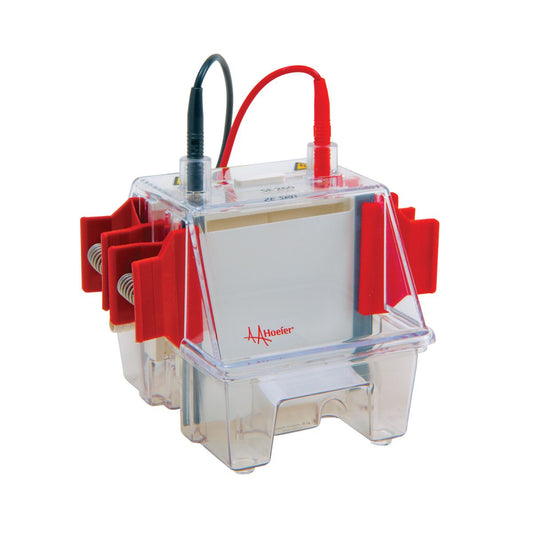
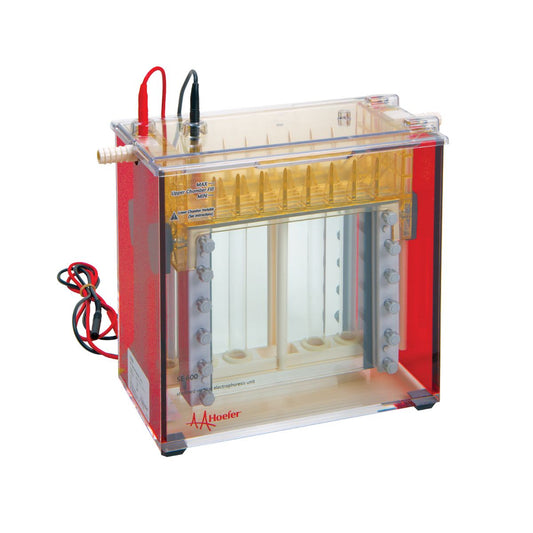
Dimensional (1-D) protein electrophoresis is used by scientists to separate protein molecules based on physical characteristics such as size, shape, or isoelectric point. Typically an acrylamide matrix is required to achieve the best separation of proteins. The technique is frequently abbreviated PAGE which stands for Poly-Acrylamide Gel Electrophoresis. Most systems for protein separation are designed in a vertical format which allows for air to be excluded during casting. Gels are then either suspended between or submerged into buffer tanks for separation. For 1D protein gels, combs are used to form wells in which liquid samples can be applied. An electrical field is applied to allow proteins to migrate. Following separation, the gels can be stained by chromagenic stains (coomassie or silver) or by fluorescent stains in order to detect the proteins. Alternatively proteins can be transferred to membrane supports (Western blotting) for processing by immunodetection.
Two Dimensional Protein Electrophoresis
Dimensional (2D) electrophoresis is a powerful and widely used method for the analysis of complex protein mixtures extracted from cells, tissues, or other biological samples. The advantage of 2D protein electrophoresis is it combines two methods of separation and allows the resolution of up to several thousand protein at a time. The first dimension of a 2D gel separates proteins according to their charge using an immobilized pH gradient (IPG) strip. Proteins migrate in the strip until their charge becomes neutral and then stop their migration. The second dimension gel is typically an SDS gel which separates proteins based on their mass. The results are individual proteins resolved into small circular regions or spots. These gels are often used to analyze samples in proteomics research since the individual spot can be excised, digested and used for mass spectrometry.
Hoefer’s Role in the Scientific Arena
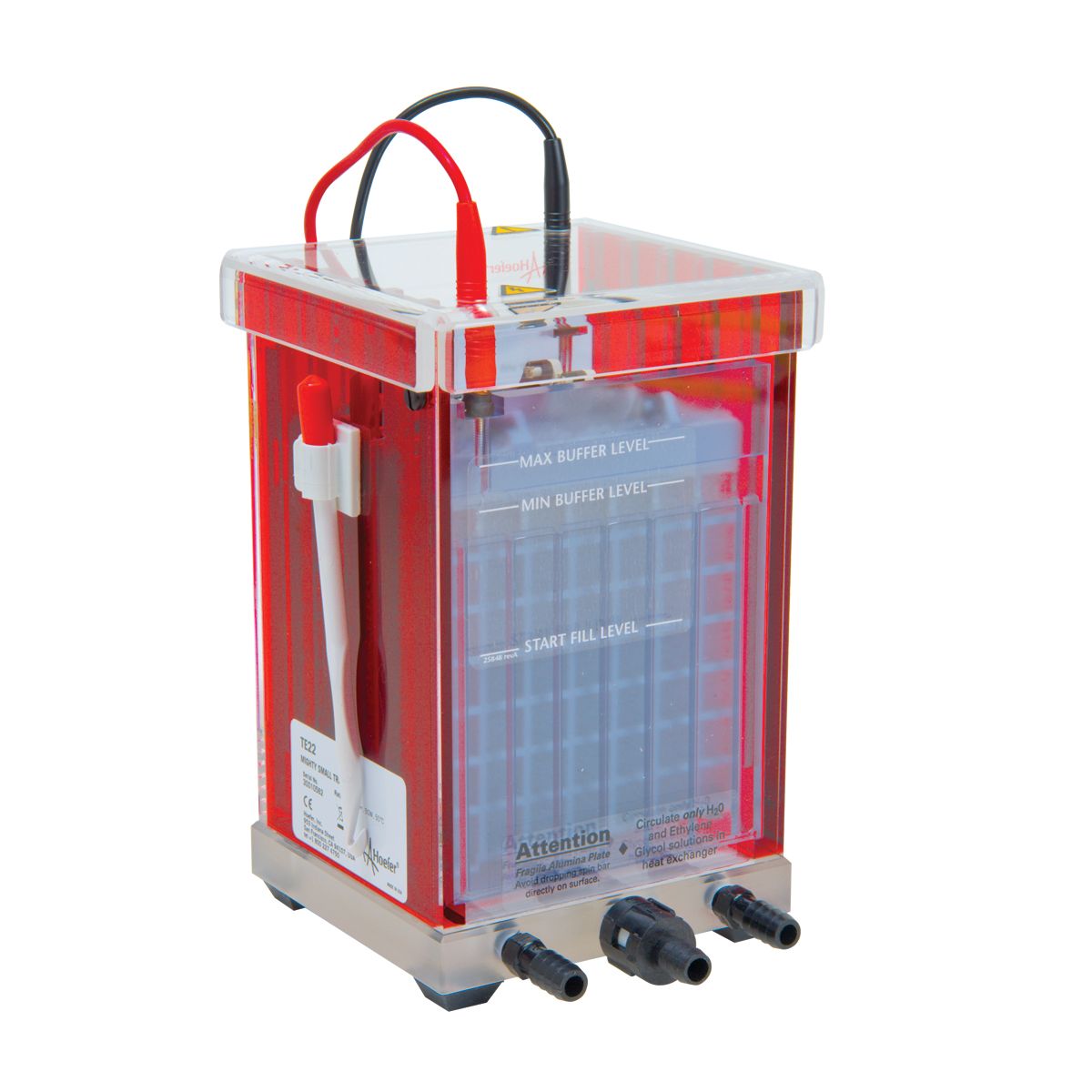
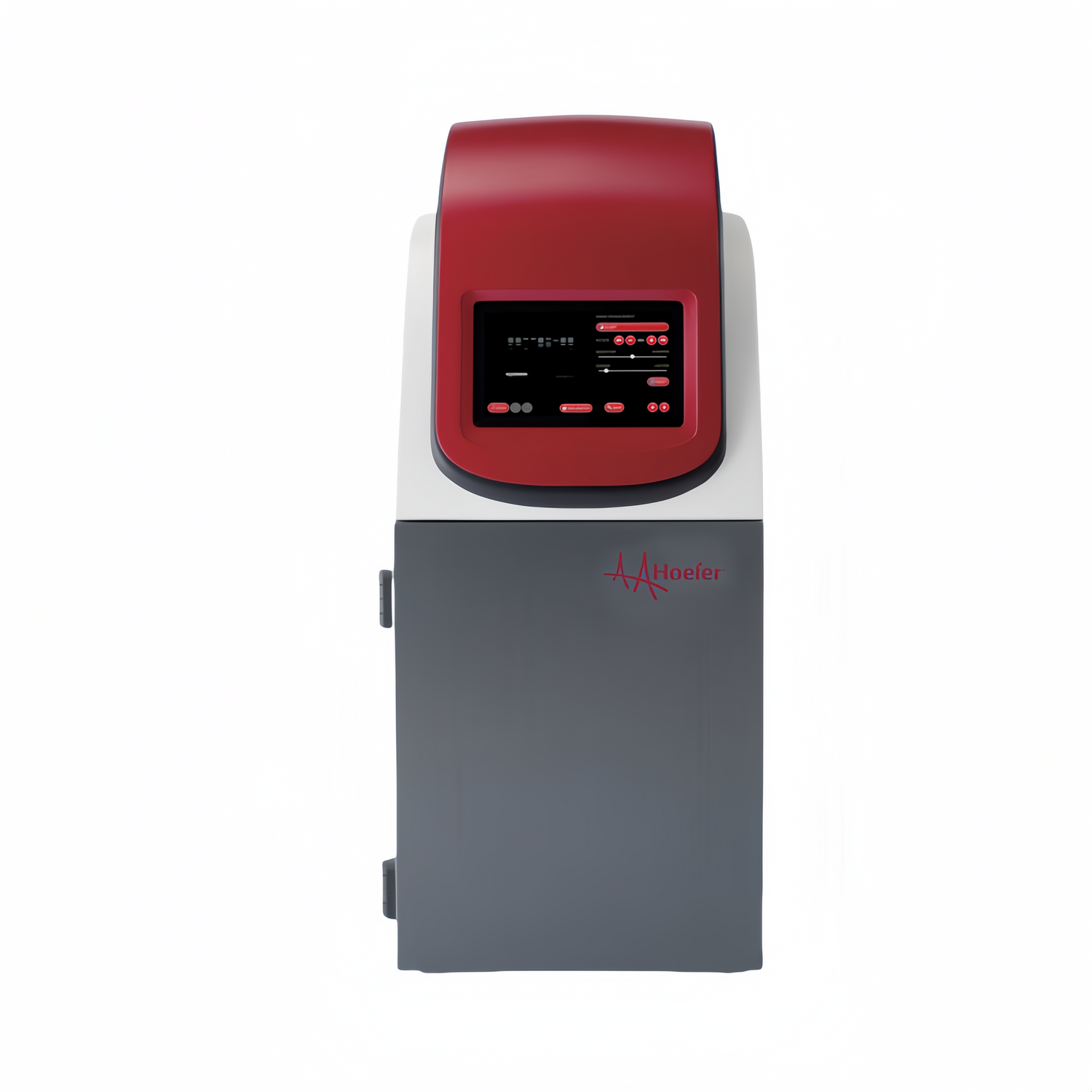
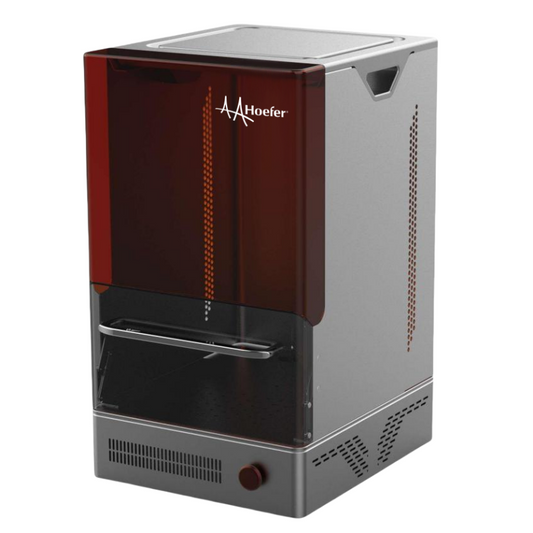
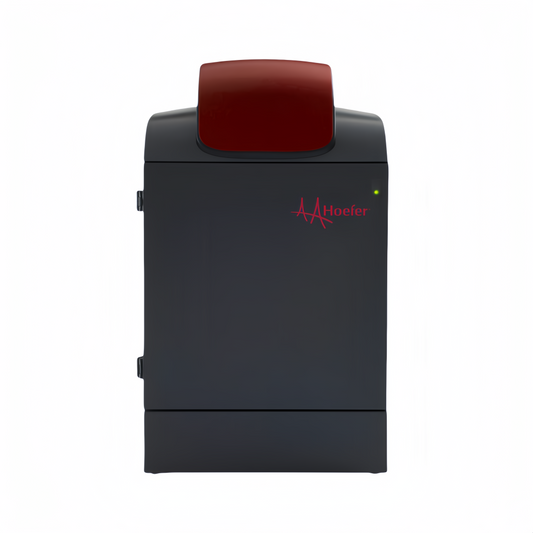
Hoefer’s mission has always been to offer scientists single-vendor electrophoresis solutions that are intelligently designed, easy-to-use, of high reliability and yield consistent and reproducible protein and nucleic acid electrophoretic separations. Hoefer designs, manufactures, and distributes an expanding line of instruments, accessories and consumables to the highest standards of excellence. Hoefer solutions include vertical electrophoresis units such as the Chroma, SE600, SE250, and MiniVE, horizontal submarine units including the HE33 and HE99 and blotting instruments such as the TE22, TE42, TE62, TE70 and TE77. Hoefer also offers power supplies, fluorometers, filtration and visualization units, gel documentation systems and other versatile tools for the protein or the DNA researcher. Hoefer, Inc. is a wholly owned subsidiary of Harvard Bioscience and is also the US distributor for Biochrom’s powerful Amino Acid Analyzer line of products.
|