
AAV Production Workflow: Step-by-Step Protocol from Plasmid to Purified Virus
Adeno-associated virus (AAV) has become one of the most widely used viral vectors for gene therapy, vaccine development, and in vivo research applications. Understanding the complete AAV production workflow — from plasmid preparation to final purification and quality control — is essential for achieving high yield, purity, and reproducibility. This guide outlines a standard laboratory-scale AAV production protocol and highlights key equipment and electrophoresis systems that support reliable results.

Overview of the AAV Production Process
The typical AAV production workflow includes:
- Plasmid preparation
- Cell expansion (usually HEK293 or HEK293T)
- Triple transfection
- Viral harvest and cell lysis
- Clarification
- AAV purification
- Buffer exchange and concentration
- Quality control (QC) analysis
Each step plays a critical role in determining final vector yield and performance.
1. Plasmid Preparation for AAV Production
Triple-transfection–based AAV production requires three high-quality plasmids: the ITR-flanked transfer vector, the Rep/Cap plasmid, and the adenoviral helper plasmid. Among these, structural integrity of the ITR-containing construct is particularly critical, as recombination or partial deletion during bacterial amplification can significantly impact packaging efficiency.
Plasmid preparations should meet defined quality parameters, including predominant supercoiled topology, low endotoxin levels, minimal genomic DNA contamination, and verified sequence fidelity across the ITR regions. Routine restriction enzyme mapping combined with agarose gel electrophoresis remains a standard method to confirm structural integrity prior to transfection.
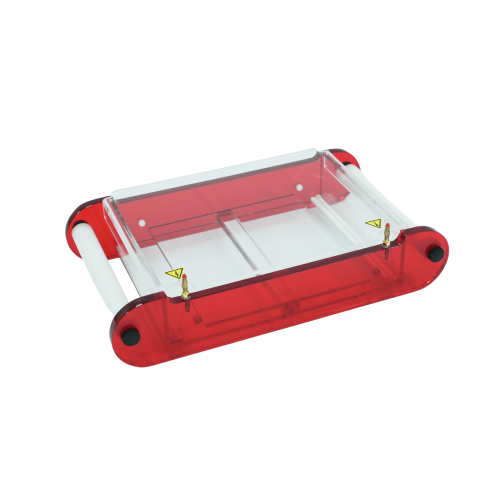
Accurate discrimination between supercoiled, nicked, and linear plasmid forms requires stable gel casting and uniform migration conditions. High-resolution DNA separation can be performed using precision electrophoresis systems from Hoefer, supporting reproducible plasmid quality assessment in viral vector production workflows.

2. Expansion and Conditioning of Producer Cells (HEK293/HEK293T)
In transient AAV production systems, upstream cell condition at the time of transfection directly impacts vector genome yield and capsid assembly efficiency. Beyond simple confluency targets, reproducibility depends on maintaining controlled growth kinetics and metabolic stability in HEK293 or HEK293T populations.
Critical upstream considerations include:
- Consistent passage window (avoid extended culture beyond validated passage range to minimize phenotypic drift)
- Controlled growth phase at transfection (mid-log phase preferred over plateau growth)
- Uniform cell distribution and adherence in multilayer vessels
- Stable metabolic profile (glucose consumption and lactate accumulation within expected range)
- High viability with minimal subvisible debris
For adherent production platforms, transfection is typically performed when cultures reach ~70–80% surface coverage; however, actual optimal density should be empirically defined based on DNA load, vessel format, and PEI ratio. In suspension-based systems, viable cell density and aggregate formation must be tightly monitored, as excessive clustering can reduce transfection efficiency and downstream recovery. Maintaining a controlled and reproducible cell expansion strategy reduces upstream variability and improves batch-to-batch consistency in research-scale and process development AAV workflows.
3. Triple Transfection in AAV Production
Transient triple transfection remains the dominant method for research-scale AAV production. The efficiency of this step directly determines vector genome yield and capsid assembly quality. Common transfection chemistries include:
- Linear PEI (widely used for cost-effective scalability)
- Calcium phosphate precipitation
- Commercial lipid-based reagents
Critical process parameters include:
- Mass ratio of transfer : Rep/Cap : helper plasmids
- Total DNA load per surface area or per million cells
- DNA-to-reagent (e.g., PEI) ratio
- Complex formation time and media conditions (serum presence, pH stability)
Suboptimal plasmid ratios or excessive DNA load can lead to reduced packaging efficiency, increased cellular stress, and altered VP1/VP2/VP3 capsid stoichiometry. Following transfection, cultures are typically maintained for 48–72 hours. During this period, monitoring should focus on:
- Morphological changes indicating transfection stress
- Controlled onset of cytopathic effect (CPE)
- Maintenance of viable cell population prior to harvest
Capsid Protein Expression Analysis
Expression and assembly of AAV capsid proteins (VP1 ~87 kDa, VP2 ~72 kDa, VP3 ~62 kDa) are routinely evaluated using SDS-PAGE and Western blot analysis. Proper capsid formation is characterized by the expected VP ratio (~1:1:10), and deviations may indicate suboptimal transfection conditions or plasmid imbalance.
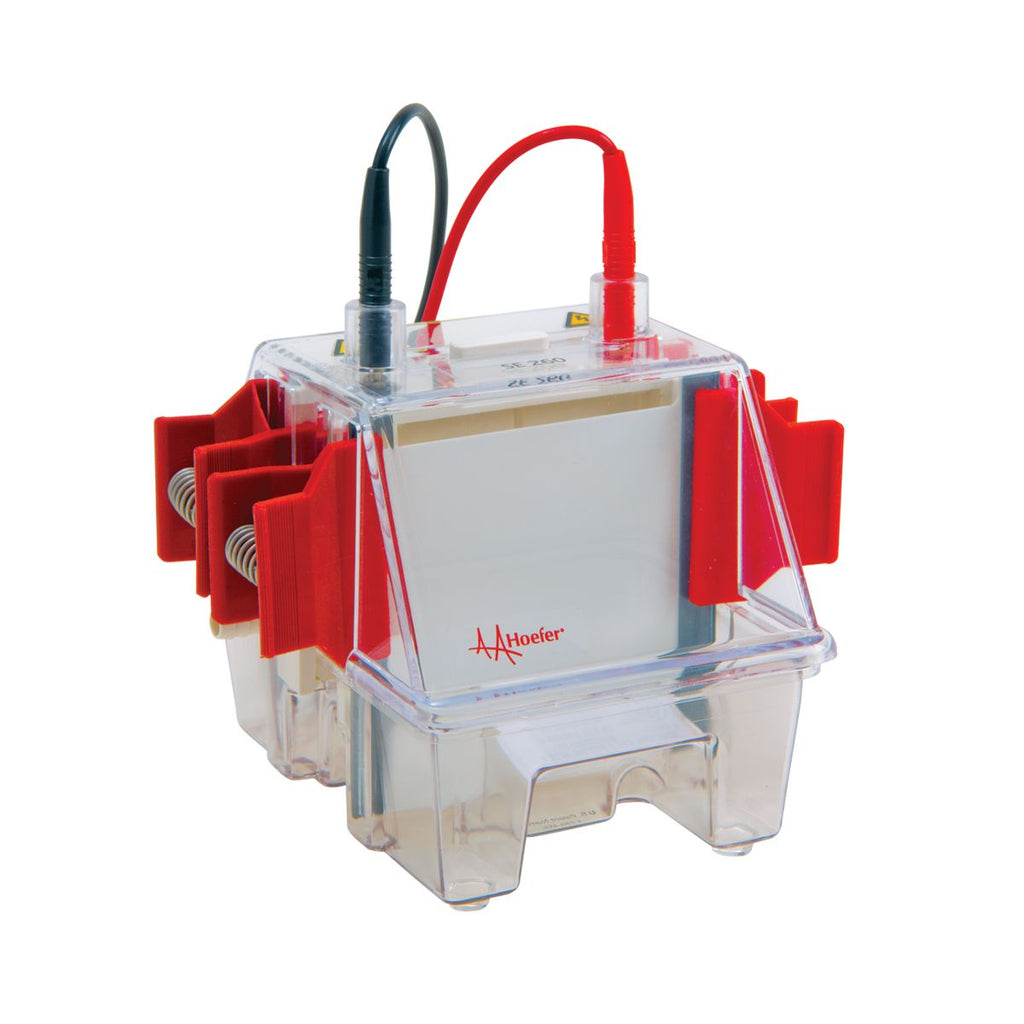
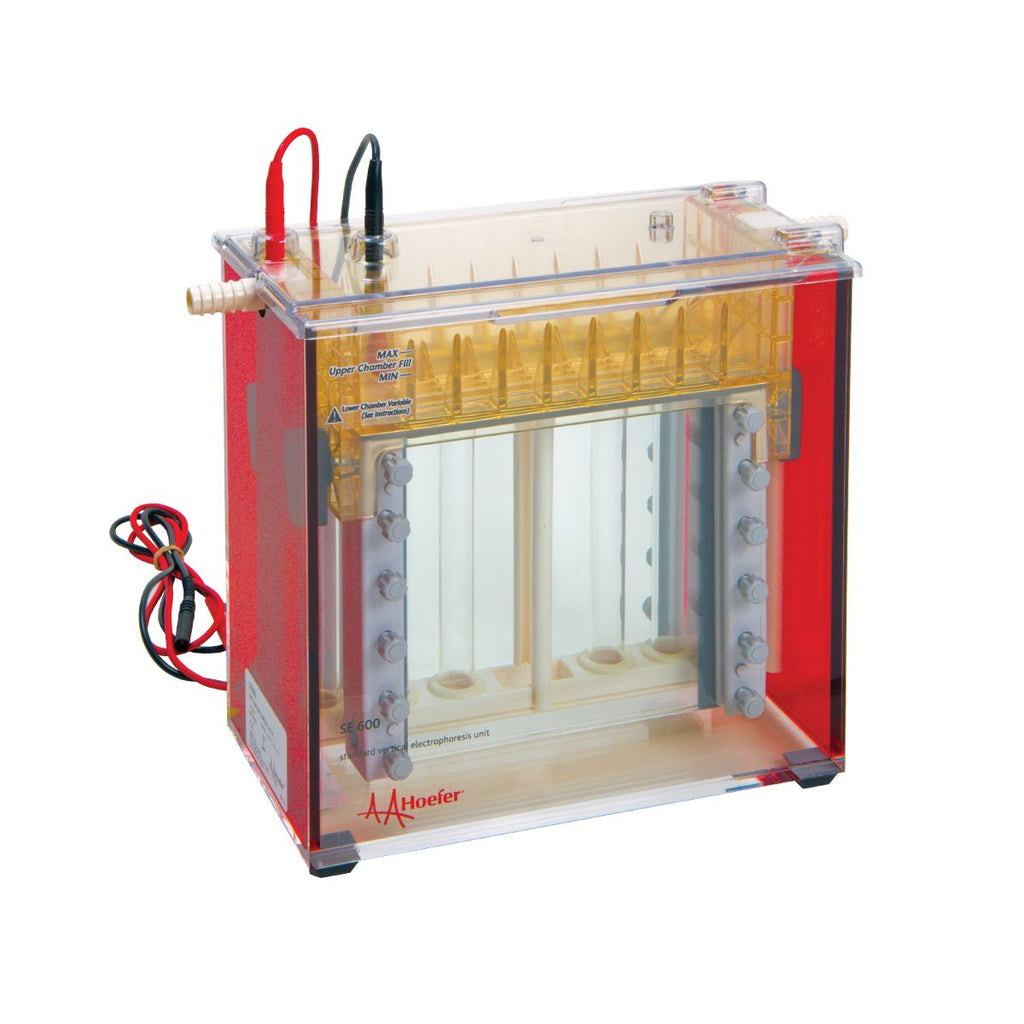
High-resolution separation of viral capsid proteins can be performed using precision vertical electrophoresis systems from Hoefer, which support consistent gel casting and reproducible protein migration for analytical assessment in AAV production workflows.
4. Viral Harvest and Cell Lysis in AAV Production
In transient HEK293-based systems, the majority of recombinant AAV particles remain cell-associated at the time of harvest. Therefore, recovery efficiency depends on effective cell disruption while preserving capsid integrity and minimizing process-induced aggregation. Harvest timing is typically 48–72 hours post-transfection, when intracellular vector genome levels peak but prior to excessive loss of viability that may increase host cell protein burden.
Key Considerations During Harvest:
- Efficient recovery of cell-associated AAV
- Controlled mechanical stress to avoid capsid damage
- Limitation of host cell DNA contamination
- Compatibility with downstream purification strategy
Lysis Strategies
- Repeated freeze–thaw disruption
- Detergent-assisted chemical lysis
- Microfluidization or controlled homogenization (for larger scale)
While freeze–thaw remains widely used at research scale, it may introduce variability in recovery efficiency. Detergent-based lysis can improve consistency but requires optimization to prevent interference with gradient or chromatography purification.
Nuclease Treatment
Benzonase (or equivalent endonucleases) is routinely incorporated post-lysis to degrade residual plasmid and host genomic DNA. Efficient nuclease digestion reduces lysate viscosity, improves clarification efficiency, and decreases the DNA burden entering purification steps — a critical factor influencing iodixanol gradient resolution or affinity column performance.
- Nuclease concentration
- Mg²⁺ availability
- Incubation time and temperature
- Mixing efficiency
Incomplete DNA digestion often results in increased backpressure during chromatography or poor layer definition during density gradient ultracentrifugation. Careful control of harvest and lysis conditions directly impacts downstream purification efficiency, impurity profiles, and overall AAV recovery yield.
5. Clarification of Crude Lysate
After cell lysis, the crude lysate contains AAV particles, host cell debris, and nucleic acids, which can impact downstream purification performance if not properly clarified. Efficient clarification ensures high recovery, consistent gradient resolution, and prevents premature column fouling.
- Centrifugation parameters: High-speed centrifugation is used to sediment cellular debris while retaining soluble AAV. Spin speed, time, and temperature must be optimized to minimize capsid aggregation.
- Filtration: Sequential filtration through 0.45 µm and 0.22 µm membranes removes remaining particulate matter. Pre-filters can reduce clogging and extend column life in affinity purification or ultracentrifugation gradients.
- Viscosity management: Residual DNA or large protein aggregates can increase lysate viscosity, affecting filter performance. Effective nuclease treatment during lysis reduces this risk.
- Scalability: For larger-scale processes, controlled depth filtration or tangential flow filtration can replace batch filtration to maintain consistent flow rates and product recovery.
Proper clarification is critical for reproducible AAV yield, capsid integrity, and downstream purification efficiency.
6. AAV Purification Methods
Downstream purification of recombinant AAV is critical to achieve high vector genome titer, capsid integrity, and regulatory-grade purity. The choice of method depends on research scale, serotype, and intended application.
A. Iodixanol Gradient Ultracentrifugation
- Prepare stepwise iodixanol gradients (typically 15%, 25%, 40%, 60%)
- Load clarified lysate and ultracentrifuge under controlled speed and temperature
- Recover viral fraction (generally the 40% interface), which contains predominantly full capsids
High-resolution electrophoresis systems from Hoefer facilitate consistent and reproducible separation for QC analyses.
B. Cesium Chloride (CsCl) Gradient
- Longer centrifugation times
- Extensive dialysis to remove CsCl
- Careful handling to prevent capsid destabilization
C. Affinity Chromatography
- AVB Sepharose: high affinity for AAV capsids across multiple serotypes
- Heparin columns: used for certain serotypes with heparin-binding tropism
Gel electrophoresis and Western blot remain key tools for fraction QC, with Hoefer systems providing robust, reproducible separation of viral proteins.
7. Buffer Exchange and Concentration
- Centrifugal concentration: Ultrafiltration devices with a molecular weight cutoff (typically 100 kDa) are used to concentrate the viral preparation while retaining capsid integrity. Recovery efficiency depends on filter membrane characteristics, centrifugation speed, and volume load.
- Buffer exchange: Exchange into physiologically compatible buffers (e.g., PBS with 0.001% Pluronic F-68) to maintain capsid stability, minimize aggregation, and reduce surface adsorption. Multiple diafiltration cycles improve buffer replacement efficiency.
- Sterile filtration: Final filtration through a 0.22 µm membrane ensures removal of potential microbial contaminants.
- Formulation optimization: Non-ionic surfactants or sugars can improve long-term stability.
8. AAV Quality Control (QC) and Characterization
- Genome titer: qPCR or ddPCR
- Capsid protein analysis: VP1/VP2/VP3 ratio ~1:1:10, Hoefer SE Series electrophoresis
- Empty vs full capsid analysis: AUC and TEM
- Residual host cell protein: SDS-PAGE/Western blot with reproducible gel polymerization
Optimization Factors Affecting AAV Yield
- Plasmid DNA quality
- DNA ratio optimization
- Cell density at transfection
- Transfection reagent quality
- Serum type (for adherent culture)
- Harvest timing
- Lysis efficiency
Research-Scale vs GMP-Scale AAV Production
| Parameter | Research Scale | GMP Scale |
|---|---|---|
| Transfection | PEI / Calcium phosphate | Optimized PEI or suspension systems |
| Purification | Iodixanol | Affinity chromatography |
| QC Depth | Basic titer + SDS-PAGE | Full regulatory panel |
| Documentation | Lab notebook | GMP batch record |
Conclusion
The AAV production workflow involves multiple carefully controlled steps — from plasmid preparation and cell transfection to purification and rigorous quality control. Success depends not only on biological optimization but also on reliable laboratory instrumentation that ensures reproducibility and analytical precision. By combining optimized cell culture techniques with robust analytical tools, researchers and manufacturers can achieve:
- Higher viral yield
- Improved purity
- Batch-to-batch consistency
- Regulatory readiness
Maintaining sample integrity throughout the workflow is equally critical. Proper storage of plasmids, viral lysates, and purified AAV fractions ensures stability and reproducibility. Hoefer offers a range of sample storage solutions, including precision low-temperature storage units, sample tubes, and rack systems, designed to preserve DNA, RNA, and protein samples under controlled conditions.
For laboratories seeking dependable electrophoresis systems to support DNA and protein analysis in viral vector production, visit: Hoefer Systems.